Friday, 19 November 2010

Titanic effort


We do not believe the smartphones war will be a minor one at all. At the moment it looks like Apple’s iPhone and Google’s Android-based alternatives are taking a clear lead, eons beyond historical kings of the hill, Nokia and RIMM.

The latter will need a titanic effort to recover and catch up, apparently.

It looks, however, that Nokia’s N8 model, expected to be the company’s flagship, did not really get what “Titanic” was supposed to mean, we’re afraid.


Staying in Moscow


When Germany invaded the Soviet Union in 1941 the world held its breath. Millions of German soldiers crossed the border, and once again smashed whatever troops the enemy put up against them in a major demonstration of the new way of leading war. Blitzkrieg, they called it.

Soviet units fell one by one anywhere the Germans appeared. Encircled by the dozens, the Soviet divisions surrendered and marched to the POW (Prisoner of War) camps in the German rear, or were killed on the spot. The biggest Army by manpower, the red units lost men by the millions.

The Soviet High Command was a complete disaster. No coherent defensive strategy was in place. And worst of all, Stalin virtually disappeared. It seemed he did not want to face reality, the brutal German invasion. Lacking leadership, Soviet cities fell to the Germans, dashing like lightning towards Moscow.

Soon enough, the Soviet government withdrew eastward, beyond the Urals mountain range, in order to reset itself and try to resist somehow the monstrous German tide. All the cabinet fled. All but Stalin.

When Moscow was nearing the German assault, Stalin finally appeared, almost at the very last moment. He delivered to the people one of his propaganda masterpieces, setting the guidelines for Soviet resistance. He was there, he appeared in the very last moment, proved he had not given up, and Moscow did not fall. Probably the Soviet peoples will to resist and ultimately destroy Germany started there and then.

Quarterly financial numbers have a reasonably good expectation for HP. However, from a share perspective, the HP armies are still being beaten by the major cataclysm of Mark Hurd leaving the CEO job in early August.

While struggling in this entourage, HP’s strategy seems to be the very same one Hurd designed and left for his successor to inherit. And Wall Street is not buying it. The biggest army by revenue, its strategy to recover capitalization value was not there.

And its master leader, its CEO, has not publicly shown up three weeks after his official start date…

If History repeats itself, Léo Apotheker should pop up soon, and as the Soviet people did, the market will certainly need a propaganda masterpiece to spark recovery and confidence in putting HP where it should be from that very moment.

Show up before Moscow falls, Léo. The subpoena matter at the SAP trial is a smoke curtain. You can, you should, you ought to. 


Incrediboy’s Syndrome


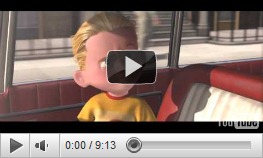
Lovely story the one in The Incredibles movie, wasn’t it? Everybody can easily recall the glory days when Mr. Incredible, on his own, was carrying on his war against evil. Alone.

Focus on minute 4…

So admired was he that one of his fans, a young teenager, wanted to emulate him. Incrediboy was the name the kid chose, and gallantly offered his services to Mr. Incredible who bitterly rejected the offering. “I work alone”, said he.

Incrediboy was pissed off and seriously outraged, to the point that years later, when superheroes had been called off, he had amassed an enormous wealth and power to turn himself into the most fearful super-villain ever, Syndrome by name. Rejected by superheroes as a teenager, he had turned to the opposite side, and changed his personal aims to end up with any trace of past superheroes and end up dominating the world, as all decent super-villains usually do, of course.

I would say everybody knows how the story ended.

But now we have the modern version of Incrediboy trying to imitate superheroes again… True that todays Incrediboy looks more like the retired Mr. Incredible before he resumed his past glorious times, but still an Incrediboy with a big big big post traumatic stress syndrome…

He as well tries once and again to be like his hero… and his hero kingly ignores him once and again…

Being like this as Incrediboy, we resist ourselves to imagine how he’d be like as Syndrome.

Thursday, 18 November 2010

By George, they did it!


One of the greatest musical milestones in classical movies is My Fair Lady, based on George Bernard Shaw’s play Pygmalion.

Poor Eliza Doolittle, from lowest social extraction, is used by Professor Henry Higgins as an experiment about teaching English, in an attempt to prove his methods can bring such a low-class person to the ranks of Aristocracy. At least in what relates to speaking English properly.

Professor Higgins takes care of her completely, as she is poor and has no resources of her own besides selling flowers in the street for a living. She totally depends on his wealth while she receives her lessons.

Despite providing her all possible physical comfort, he is so much oriented to his own personal success with the language experiment he is using her for, he does not really care for being considerate at all with her, and actually treats her like a scientist would handle a guinea pig.

Naturally, she ends up completely fed up, and quits, disregarding and ignoring all the good he claims to have provided her with. She simply does not stand his arrogance and tyranny any more, and looks for alternatives that indeed could work for her.

By George!

We would say that “Professor Ballmer”, with all his wealth, power, aristocratic profile (well, this one under discussion), and methodologies, really can not stand up to all the Eliza Doolittles that so much have depended on him for so long, can he?


Swift cats


Indeed the “trial of the month” moves forward towards its closure. Peculiar trial, dressed with a lot of surrounding attrezzo, from the Pontifex Maximus at the Oracle’s (aka Big Mouth Larry) venomous invectives to all the assumptions made here and there of where all this will end.

There has certainly been a big unbalance between the relative importance of the heavy-weight witnesses presented by the two parts. From the Pontifex himself and co-President Katz from the Oracle to Bill McDermott and Werner Brandt for the Germans, the overall declarations have as well fallen short to expectations, and basically around their original positions: up to $4 billion according to the oracle, not more than $40 million offered by the Germans. And none of the parts have given in more than an inch from those positions.

One of the strongest witnesses from the oracle, however, has been co-President Katz, whose main argument was about rewarding bad behaviour of the Germans. Ironically enough, “Katz” is a German name derived form Katze, meaning cat…

“It’s like stealing a $2,000 watch, selling it for $20, and offering to pay the $20 back as compensation”, she’s declared.

The argument is indeed difficult to respond appropriately after a first thought. It might have made a strong impression in the jurors on behalf of the oracle. as a good finance expert, she has even mentioned figures in her example that are exactly proportional to the figures discussed in the trial. 2,000 is 100 times 20, ad $40 billion is exactly 100 times $40 million. Very, very, very smart from hers.

However, there is a subtle nuance that jurors and judge Phyllis Hamilton should take into account. If someone steals your $2,000 watch, indeed he is stripping you off $2,000. Downloading copyrighted material is basically making a copy of that material. And copying it is not stripping you off the value of that material. So the point is basically that illegally copying copyrighted material, SAP used it for its own benefit without really preventing the oracle from using it on their own. In other words, it’s like an athlete unfairly competing in a running race by using illegal drops that reduce the competitive advantage of a better honest runner.

And this id probably why the actual damages (only 358 customers switched from the oracle to TomorrowNow, according to information available online) have been so small compared to the theoretical potential.

Not denying that SAP behaved bad, the already settled amount of $120 for criminal charges, plus damage reparations of $40 really sounds reasonable in our ears., though this is just an opinion of ours, who do not claim at all any expertise in law matters.

What we really are impressed with is Katz’s rationale and argumentation… together with a much more senior and mature attitude than her boss’. Indeed swift, indeed smart, indeed subtle, and probably very powerful. No surprise she sits where she does at the oracle.

Hard and tough rival in the internal struggle for the Pontifex heritage you got there, Mark Hurd…


Wednesday, 17 November 2010

Next Year in Jerusalem


In the times of Roman Emperor Hadrian, second century after Christ, Simon Bar-Kochba led one of the very last Jewish revolts in Judaea against the imposition of Roman religion.

This revolt when pretty much like previous ones: Three years combat, about half a million people dead, including leader Simon Bar-Kochba and the rabbi Akiba, the latter after great torture.

Emperor Hadrian built a new city, Aelia Capitolina, on Jerusalem’s ruins and barred all Jews from coming anywhere near it.

Since then, all over the worlds, Jews have mournfully prayed “Next Year in Jerusalem…”

Palm’s Rubinstein, in recent appearance at Web 2.0 Summit has claimed Palm’s birthright to have owned the smartphone market, should they have done a better job.

In other words, should have they cared for doing a decent job, their “Jerusalem” would have flourished and set as the smartphone reference. But a much stronger power, call it Apple, Nokia or Blackberry, has de facto imposed new rules in the market, and destroyed Palm’s “Jerusalem” with a lot of pain and suffering for the latter.

Ever since, it appears that Palm’s staff keeps on claiming, quite mournfully too, “Next Year in WebOS…”

Dorothy’s smartphone


We have recently learnt Apple is adding The Beatles to iTunes… Good for them! No matter whether Google or Amazon were after the same deal, the UK band goes to Apple.

Easy to say that Apple’s taking The Long and Winding Road… but we prefer to think it is their competition who are going to have some difficulties on the road, and it is for them that the road might be really long and winding.

However long or winding it still looks as well, in our opinion, more like the yellow brick road. And if we think yellow brick roads, we couldn’t avoid thinking of Dorothy, could we?

So here we have Dorothy starting her way on the yellow brick road trying to figure out how to succeed with her smartphone.

First she gets a call from the Scarecrow, who asks her some help to add some brains to his berry-like smartphone… Willing to learn from his experience, Dorothy asks him to join her in her quest for success in the smartphone market.

A short while after, she gets a call from the Lion with no courage. “Hey, Dorothy, need some help here… Got the muscles and the fangs, but I am really afraid of getting out there… Maybe next year if I make it for WebOS 2.0?” So Dorothy invites him as well to join her and the berryphone Scarecrow in their quest for success in the smartphone market.

Later on they find the Tin-Man lacking of heart… “Oh, what a nice android”, they say. “Come join us to look for success in the smartphone market”. The Tin-Man replied: “Indeed I need help: So many versions I have, and so many handset makers I need to support, I do not really know where my heart is, if I have any”.

And so the little group went on looking for success in the smartphone market…

“We’re off to see the Wizard, the wonderful Wizard of Phones, because, because, because, because, becaaaaaaauuuuuuse… because of the magical things he does”…

And they indeed found the Wizard… in a black turtleneck and old jeans, wearing round glasses.

Up to the reader, by the way, to think who Dorothy is… (hint: sweats a lot!)

lovely classic, still, obviously, up to date!

A wintel déjà vu


We like taking a look back to History every now and then and compare the past with what might be going on every day. In many cases we see amazing analogies, but in some others there are nuances that make slight twists.

Following closely as we do the early stages of the booming smartphone market, we cannot prevent ourselves from having a certain déjà vu feeling as we compare it with the PC business some years ago.

We could say for a moment that smartphones today might represent what PCs did in the 1990s, when the market was certainly growing very fast under the impulse of its consumer side. PCs were not unknown to the consumer market, though real technology leaps and breakthroughs were coming from the enterprise segment, and were gradually implemented in the consumer segment as costs were being slashed and PC manufacturers were in the need of keeping their business targets up.

In that process, two big winners consolidated positions at the expense of hardware manufacturers: Intel and Microsoft, who dominated that market, and all the selling effort cost their lives to many hardware assemblers that could not keep the pace. From all the manufacturers, multinational or local, from the 1990s, very few survive to this date. Big names like Dell, HP, Toshiba, Acer, and Lenovo (as ex-IBM) are the toppers of this short list.

Smartphones have followed a very similar way, as they are starting to boom in the consumer market after an initial successful deployment in the enterprise segment. We believe Qualcomm will play the role of Intel, and, naturellement, Android will play Microsoft’s.

We seem not too be in full disagreement with the opinions from others.

However, we see some differences with the Wintel tyranny if we approach the case from a different angle.

First, we can look to the the actual use consumers and professional users give their smartphones: Connectivity. Smartphones are the logical evolution of standard mobile phones because of the connectivity possibilities: Email, internet, social networking… Before that, mobile phones were basically regular phones to do texting as the most advanced feature. Like PCs in the 1990s, which, in very many cases, worked standalone at home, or connected at most within a professional intranet.

Smartphones can work today autonomously and get connected directly to almost everywhere with no necessary need of uniformity in the way they connect (ie needing the same operating system).

Second, we think today technology is much more accessible to people in general, who have grown earlier much more knowledgeable. In the 1990s, when people were acquiring their first PC for home use, they needed something they were familiar to, the Windows familiar environment they had learnt at work. This gave a major advantage to the Wintel tyrants. Today, even kids know how to use a smartphone with no need to depend on any familiar system used before at work, obviously.

Third, in the 1990’s, there was a certain lack of competition, as Apple, the only possible one, was suffering its famous “near-to-death” experience. If you wanted a PC, there were almost no alternatives to Wintel. Today, the smartphone market has been led by Apple, Nokia and Blackberry, and Androids are catching up real fast. Even HP is promising something on Palm’s WebOS, and there is a certain attempt from Microsoft with Windows Mobile 7.

So, yes… there is a risk of having a “Qualdroid” tyranny in the Wintel space… and we indeed pity some of the handset makers that will die for it sooner or later. But, thank God, it seems that there will be intelligent life out of it, and there will be valid alternatives for the benefit of the market.


Monday, 15 November 2010

Quest for blood


The Pontifex Maximus at the oracle is not really willing to give up in his quest for blood from SAP. He wanted Apotheker’s, who fundamentally has been ignoring the case and has probably made a new record in air mileage in the last days.

Having failed there, still they got a heavy-weight official today, Bill McDermott, SAP co-CEO. It looks as if the Pontifex will not give up without a sip. A sip from SAP, naturellement.

Bill McDermott has formally apologized. Yes he has, and this is very positive for him and for SAP.

However, the oracle’s lawyers have repeatedly insisted in knowing if blood was spilt after the case within SAP.

For God’s sake, what else do these guys want? What is the point? Does that really increase or reduce the guilt SAP has admitted and (now) even apologized for? Does that impact the damages SAP has offered to (reasonably) pay for?

As we said in a previous recent post, frankly, they are beating the Germans up too much, as President WIlson and his European allies did in 1919 with the Treaty of Versailles that ended WWI.

The Pontifex’ thirst seems pretty much like a vampire’s… Twilight’s Vulturi?


Bad Germans


It has been reported that the priests and the Pontifex Maximus at the oracle might be about to wrap their case up in the known copyright trial against SAP.

I guess it was an easy job for them, for in a nutshell, their summary is probably very similar to the Treaty of Versailles in 1919, which ended World War I.

As in that occasion, the message looks like:

Point One: The Germans are bad. The bill is $1.6 billion.

Point Two: The Germans are veeeeeeeeeeeeeery baaaaaaaaaaaaad. The bill is $1.6 billion.

Point Three: In case of doubt, please review previous Points One and Two. And the bill, in case of doubt, is $1.6 billion.

Very convenient and timely, as Germany recently finished WWI reparation payments, and therefore they are fresh for paying. $1.6 billion, should we have failed in hinting the bill.

Expensive dowry


Well, after the love-hate story, or eventual re-marriage between Dell and EMC will come with quite a dowry.

Good for the second-timer newlyweds, good for the sector, that has seen some optimism in the share value in general, and some more gossip to talk about, like all other weddings.

The matter with this dowry, however, is that despite benefitting Dell indirectly, it does not really empower them against HP, who already beat them at 3Par.

The big winner: EMC. Half winner, HP… and Dell weakens a bit, relatively speaking.


In the bowels of the oracle


In order to preserve his anti-monarchist ideas, Oliver Crowell invaded Scotland around 1650. One of the parties whose support he tried to get to his side was the Scottish Church, which eventually had some sympathy for recently crowned King Charles II.

Stubborn Presbyterians, the Scots were difficult to convince, and insisted in their position. Oliver Cromwell gave a famous appeal in an all-out attempt to make the Scots realize the wrong in their support to monarchy. “I beseech you, in the bowels of Christ, think it possible you might be mistaken”.

As the third week for the trail between Oracle and SAP starts, we realize on our side that the Pontifex Maximus, aka Big Mouth Larry, does not seem to give in an inch on his strategy, and once more he insists in justifying his monetary demands on the level of guilt he tries to prove on SAP officials.

With Léo Apotheker fundamentally ignoring the case and wandering around the world, the next biggie on the stand will be Bill McDermott, co-CEO at SAP.

Again, out stubborn Pontifex insists in a useless strategy, as after having admitted guilt, the point is not how criminal SAP could have been, but more determining the size of the damage that SAP caused the oracle. Whatever SAP officials say, this won’t really increase nor diminish guilt at SAP. It’s the value of the damage what matters, as clearly Judge Phyllis Hamilton has understood and instructed jurors to consider.

If Big Mouth Larry has any true friends, one of them should speak up to him and, trying to help him getting rid of his stubbornness, “beseech him, in the bowels of the oracles, think it possible he might be mistaken”.

A drop in the ocean


Despite how sound it may look, indeed it is a drop in the ocean. 9,000 HP Slate orders based on a pretty expensive device with a non-optimized OS does not really look impressive.

HP stated before, however, they would have this sort of product after the failure in formally launching it almost a year ago when plans to acquire Palm were already progressing in the Palo Alto based giant.

We actually think this is nothing but a token for HP to prove they are not (completely) dead yet in this segment, plus creating some buzz around what should be more linked to HP in the customers mindshare, WebOS that is. At the same time, HP probably might be legally tied to Microsoft in developing this kind of thing from the times in which Palm was not yet in HP’s radar screen.

So the news is not that much about bathroom-scale tsunamis, but about when HP will finally come up with something tangible in the tablet arena based on WebOS.

Everybody is going to have been there for a while when HP arrives, and the more time it takes for HP, the more difficult it will be for them to really make something remarkable.

The more HP remains with Microsoft, the more they will end like the two blind men in the Bible.

“so ignore them. They are blind guides leading the blind, and if one blind person guides another, they will both fall into a ditch.", Matthew 15:14.

The market will ignore them both.

Sunday, 14 November 2010

NO! Not the gumdrop buttons…


Who can’t recall the scene in the first Shrek movie when Lord Farquaad mocks the Gingerbread man?

"Run run run as fast as you can, you can't catch me, I'm the ginger bread man!"

Probably this is what the Google guys had in mind when they decided to name Gingerbread their new version of  Android OS to be launched pretty soon: Running and speeding, like Apple does.

After cupcakes, éclair, donuts and frozen yogurts, they really want to add some speed to the market, and catch up with the IOS4.2 as well, scheduled as well soon by the guys from Apple.

The issue here is not that much how fast Gingerbreads can run, but how speedy the handset vendors implement it in their devices. Dell’s Streak, for example is still to get latest updates on Froyo, and many others are still in earlier versions of Android.

Again, one of the apparent disadvantages of Android: Too many versions, too much fragmentation, and handset vendors who will have to squeeze their brains like crazy to avoid squeezing their margins too much when differentiating themselves…

 One of the big opponents and rivals to Android, as we have said before, seems to be the Blackberries and the MeeGos who like Farquaad, seem for the moment much more powerful, bigger and stronger than little Gingerbread Androids, though the latter is biting market share away from them like crazy.

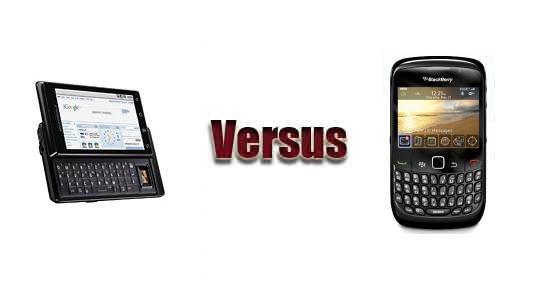
Just having a look to a typical Blackberry or Nokia device, we are not surprised to note how obsessed these two Farquaads can be with buttons, too many of them they have. Maybe they don’t want anybody else with any button at all…

Memento mori


One of the most important celebrations and rites in ancient Rome were the Triumphs. These were ceremonies granted to victorious generals after a successful campaign against an enemy of equal status to theirs. Triumphs, therefore, had no sense when a military campaign was against a slave revolt, for example.

These celebrations were structured around a big military parade which included the victorious general leading his actual troops, treasures and spoils form battle captured to enemy, and enemy leaders too, who were later to be executed in different ways. Celebrations as well included public games and shows, big banquets paid for by the triumphant general, and could eventually last several days.

It was the glory day for the general, who got all the privileges and attention form the whole city of Rome. He was the man of the day, certainly, and not even the Consuls could defy the general’s authority during the triumph.

Military was important for the Romans at that time, and several important Consuls got the job precisely after having succeeded in battle: Gnaeus Pompeius Magnus, Julius Caesar, Gaius Marius, Lucius Sulla are good examples, representatives of the top class in the most glorious times of the Roman Republic.

It is said that human beings can live about 40 days without eating, and may survive about 10 days without water, but not more than 10 minutes without some sort of flattering. Aware of this, and with the intention to limit the triumphant general’s self ambitions, custom set that the triumphant general carried behind him in his very chariot a slave who was instructed to whisper regularly in the general’s ear “Remember, sir, that you are still a mortal”…

For more than fifteen years the Microsoft Legions have mastered the IT world like old Romans did in the known world of the time. For fifteen years they have rallied the world with all types of celebrations and triumphal parades. For fifteen years the “Pax Microsoftiana” has set the foundations of the industry.

But it seems the beginning of the end f the world as Microsoft conceived it might not be far from now, and it looks like Gates, Ballmer and their General Staffs have missed the words from the slaves they should have carried in their war chariots in their triumphs, if they ever thought of carrying them.

With their empire seriously threatened, as the Roman one was by the barbarian hordes coming from the North, now they begin to realize that they should have reacted years ago. “We missed the whole cycle”, Big Ape states. Well, more than one big cycle, we’d say. Too comfortable in its own complacency, Microsoft failed to understand there was life beyond their company, and clearly intelligent one.

Still a heavy tanker, though, relying more in the cost of change that their installed base may not be able to afford than in real innovation, it won’t clearly sink fast and easy. Like the Roman Empire, it will fall at one  point in time, though still its heritage might influence their conquerors latently, as Roman culture did since its fall up to this day.

But certainly more in the road to past

History than in the way to the future.

Friday, 12 November 2010

Frankenstein’s monster


If androids are originally artificially-made human-like entities, sort of robots, then we could consider the monster created by Herr Doktor Frankenstein one of the first ones, if not the very first, according to the wonderful story by Mary Shelley.

Human-like he was indeed, as he was made from dead human body parts her creator stole from cemeteries.

Alive thanks to science, once he was conscious of himself as a live being, the circumstances turned him against his creator and his closest friends, whom he ultimately ended up killing or contributing actively to their deaths.

Google, as a modern Doktor Frankenstein, has too created an Android. Still, Android per se has no sense by itself unless handset vendors use it and actually distribute it.

Open and free an operating system it is, Android can turn to a monster quite easily. And a dangerous one.

Watch out, hardware vendors on Android… some of you may not make it for the next version of the monster. By the way, isn’t it ironic that the Apple you wanted to compete against set already the example you might need to follow?


Huff and Puff


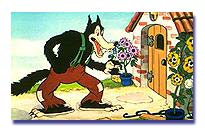
… said the Big Bad Wolf… But this time it was the brick house.

We are afraid the Pontifex Maximus’ bluff was just that. A bluff.

Where is the evidence, Big Mouth Larry? Whose credibility is now at the stake?

You have live long enough to have learnt the closer you get to the fire, the more you get burnt, Pontifex.


Google dixit


Google dixit, indeed, though we would say they fall short.

Probably Marissa Meyer went further and elaborated more, or eventually was cut short because of timing reasons and she was only allowed a tagline that she tried to summarize as much as she could.

Not only what the guy has done, but as well whatever is yet to come, as it is unthinkable to figure Apple out without him, not thinkable it is to imagine him without Apple. Not cancer nor a liver transplant have been enough to cut the link between the two, and cut was the link voluntarily, under much more favorable circumstances, between Microsoft and Billy Gates.

There is a fantastic recognition Google, by the way, already made to Steve Jobs, which is tempting him to serve as their CEO.

However, the best recognition is not told, yet obvious to those who have further vision: Google de facto tries to copy Apple. Just look at Android…

We stand up and applaud, first to Google for their comments, then to Steve Jobs, for though we compared him already to Sun-Tzu and Clausewitz, after thinking it twice, we should say he went even further. The formers were great theoreticians on strategy. Jobs moved beyond, and executed his strategy too.

Androids are vegetarian


When choosing something cool, yet personal to buy, customers make their choice based on differences. Differences that are worth paying for, that is. However, differences will have to be within a common trend or fashion.

In today’s consumer electronics market, fashion and trends mean smartphones. It is certainly not enough to have a standard mobile phone to talk or text, which is at reach for almost anybody today. Smartphones are wanted.

So the big question for a smartphone potential customer is which one to buy. The choice, again, will be based on difference between the available alternatives, and the value each difference represents to the user.

In a simplified analysis, we could say that there are two main differentiators for these products: Price/cost and features/capabilities/usability.

If we take a look to the main players in the smartphone market, from an operating system perspective, we see Android with its different flavors or versions, IOS4 by Apple, Symbian by Nokia and Blackberry by RIMM.

If we dig a bit through them, we come to the conclusion that there are only two clear leaders, one for each of the differentiation groups.

On one side, we got Android, an open operating system with the enormous advantage of cost, as it is free. This platform provides many functionalities RIMM or Nokia lack, a powerful app base with plenty of developers backing it, and a broad choice of handset manufacturers who will compete against themselves within this platform to make additional differentiation, and, therefore, reinforcing a trend lowering prices.

On the other side, we have Apple with IOS4 as undisputed leader for having set trends in the overall market, coming form the super-successful iPod success, and backed by all the brand reputation they have. Leaders in the app development and selling environments, with iTunes model, and the solid reputation for quality and usability they have proven. In fact, they represent the model others are following, from a conceptual perspective at least.

Despite all the comparisons these two are starring in the news and in the media, we do not really see a major war between them beyond their own natural spaces, given the different strategies after each of them.

Apple leads in innovation, quality, user experience and time to market, and is led my a single company that provides both hardware and software.

Androids lead in price and cost, keeping a reasonable pace from a technology and usability point of view with Apple. Now, their dependence on the different handset manufacturers may lead them to unnecessary conflict between them and need to further differentiate between themselves, potentially at the expense of sacrificing features, capability, quality, usability or reliability; as well, these eventual conflicts would have additional complication by needing to keep an eye on potential newcomers (open free operating system, remember).

So after some consolidation of the market, we believe there will be a natural (not necessarily sought though) od positioning Android as sort of “the affordable iPhone”. or “the cheap iPhone”, similarly to to what local and small unknown brands tried to do when selling their own “clone” PCs (“IBM compatible”, remember?) years ago.

“Affordable” or “cheap” alternatives to quality leaders are always well accepted by the market, and volumes come quickly up for them. Not everybody may afford buying the quality and technology leader’s products. Every car owner would like to drive BMW or Mercedes, yet these are not volume sales leaders, are they? And every man in the world would like to have an Armani suit for each day and carry a Louis Vuitton suitcase when traveling. But Toyota, Volkswagen and Renault might do with good enough cars, and it does not really matter for many people to buy their suits at Sears and travel with an unknown brand case.

The proof is the massive growth by Androids in the latest reported figures, which have not harmed Apple at all, as much as a big sales increase for Toyota or Volkswagen won’t worry a Mercedes dealer much, not to talk a Bentley, or a Ferrari one. In fact, what Androids are doing by an “affordable” offering is basically making the market grow by addressing population segments Apple’s would not reach even if left alone. Apple is probably less interested in additional volumes beyond a certain limit if they come at the expense of profits. At the end of the day, Apple is there to make money too. Especially after their near-to-death arch-famous experience in the 1990s. Truly, Apple’s sitting today on a war chest of about $51 billion, according to lots of online reports, which is twice as much of what Dell is worth at this moment in NYSE, as a reference. Apple will probably sell always less units than Android, but with much healthier financials, as their prices will be higher, and profits will come both from hardware and software. Android will make greater unit volumes, though average selling price and profits will be lower by unit, mainly moving to the handset vendors, and indirectly through ad selling to Google.

The second slice of the market that Androids are eating, is coming, therefore, from Blackberry and Symbian. A legacy niche seems to be what the future looks like for the Finnish guys, who’d better ask Santa Claus for the upcoming Christmas season for a time machine that brings the market back to several years ago, when they were the king of the hill, while the Canadian RIMM still sits on a volume leadership position (which is quickly being eroded) thanks to the cost of change that many businesses have to remove them (smartphone features at Blackberry were initially addresses to businesses more than to consumers, and very successfully, by the way). Still, their technical restrictions and limited functionality do not allow a bright future out of their niches, particularly when it is the consumer market who is driving more trends and techno than professional users.

The proof here is that the expectations for growth and revenue for these guys are more oriented to less developed markets, like Latin America or India.

For the moment, both Apple and Android seem to be able to enjoy their (different) success stories, and yet compatible, it seems. Fast growth, however, will side better with the Androids, whose armies will be eating a important portions of the market period after period… Vegetarians they seem, these Androids, as they are slowly eating the Blackberries. Vegetarians, but certainly not Apple eaters.

No luck for the bride’s kin


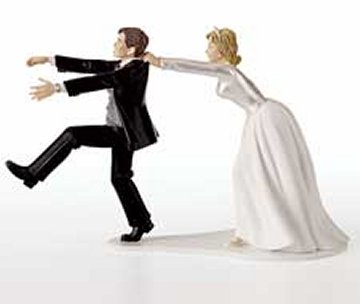
Some days ago we were talking about wedding plans. We anticipated some risks, if you would allow us to put it that way.

The ceremony was set, as set was the banquet and the afterward party.

A lovely venue, live musicians, nice food wonderfully served, and a magnificent wedding cake. The bride’s father threw in about $400 million to secure the best celebration ever, and after having arrived late, and with no particular fantastic nor blinding attrezzo, the wedding carried on.

Nobody realized the disappointment for a significant portion of the guests, who actually left the wedding ceremony before it finished, leaving behind only the loyal members of the bride’s family. To few people for all the fanfare that had been set up afterwards at the banquet.

All through the party, the groom looked passive and distracted, ignoring even having upset the bride forgetting to kiss her before they left the church, and nobody remembered to take any camera for picturing the moment the newlyweds were supposed to cut the cake.

The following day, when considering how it went, the bride’s father even considered a yard sale for many of the presents his daughter got, and cancelling the honeymoon trip (no refund, of course).

One of the few family loyalists who remained until the very end, probably to comfort the sad bride, was her elder sister. Some time ago, in fact, she had a similar experience. Was not the sister’s wedding another disaster?

Microsoft Kin 1 and 2There must be something wrong in the bride’s kin… And we are not talking the bride’s dad, who we already have known for long…