Monday, 22 November 2010

Houdini


Harry Houdini was an Hungarian-born American magician and escapologist, besides other aspects of his professional life.

He is best remembered precisely for his escapologist tricks . That was his magic: To escape from any sort of super-complicated wrapping with ropes, handcuffs or even chains, and amazing his audience with his demonstrations.

Today Hewlett-Packard has reported sort of magic results, exceeding analysts expectations.

Given the recent “escapologist” experiences demonstrated by Herr Apotheker, as Oracle has unsuccessfully claimed his attendance as a witness to the current trial it is waging against SAP, it looks like we have a new Houdini at Hewlett-Packard, as he delivers magic results when he disappears!

Sunday, 21 November 2010

Criticism and pain


When facing his government duties, Sir Winston Churchill said once: “Criticism is as necessary as pain; it reminds us that something is not going well and needs attention.”

More than a mere critical opinion or a different point of view, facts can be a much louder or stronger criticism. As such, it should probably be paid, therefore, more attention.

And for the moment, Sony Ericsson’s decision to not introduce smartphones with Windows Phone 7 is a fact.

There has been a lot of opinions back and forth, for and against Microsoft’s phone operating system… but so far, besides it’s poor performance in sales (as far as we have known), we have not seen a harder one.

If the fourth largest worldwide handset manufacturer says “no”, this is a serious warning to Ballmer’s boys. Especially if they have androids there, as reported in the link above.

Opening new stores may not be enough.

Giving free tickets for pop concerts might be useless.

Playing Incrediboy might not suffice.

Not caring for your developers might backfire.

Leaving it all to a wizard at the end of a yellow brick road may mislead.

Taking everything for granted does not solve problems.

If one treatment does not work, it is useless to repeat it to heal the problem.

and, definitely, we would not put the solving of our pains in the hands of apes.

Too many pain symptoms to avoid facing them, we believe.

Flaming balloons


By the end of the 19th Century, the German started developing balloons for military purposes. We could consider this milestone, together with the use of reconnaisance balloons during the American Civil war as the very early stages of modern air forces.

Despite the progress made since then until the late 30s, when classical planes had consolidates its dominance in the air, and when helicopters were beginning to have their earliest realistic prototypes, it was clear before 1940 that balloons had reached a dead end. The Hindenburg disaster in 1937 was the final chapter of its brief history.

Conceptually speaking, the defenders of the balloon industry used the principle of “best of both worlds” to insist in developing that industry. Static possibilities, later developed factually with helicopters, combined with actual mobility like in the classic planes, combined with its very low cost compared to the other models.

Caught halfway between the two flying models, there was no room for balloons.

In a brave attempt to bridge the gap between today’s two main trends towards easy, affordable computing ultra-mobility (netbooks and tablets), Dell is about to launch their Inspiron Duo device.

In our opinion, we are basically talking of an original design that combined the features of both types of devices, tablets and netbooks, and there is some praise about the possibility of getting the best of both worlds.

However, we see a bigger risk in getting caught halfway between both worlds, or, if you’d prefer, getting the worst of both worlds. Few advantages, all the disadvantages, that is.

Besides the clear disadvantages pointed out in the reference news, we see some more:

First, the flipping screen, as a movable part, can be sensitive to hardware failure. The less the mobile parts the better, for reliability. What takes us to the second item.

Second, though flash storage is a plus compared to standard disks with moving parts in terms of reliability, its increased capacity is not really a significant advantage, for netbooks and tablets are more and more oriented to online content that is stored in the “cloud”, not necessarily in a local disk.

Third, its operating system, as it is today, is not a rival for tablets in particular, powered by androids and iOS much more successfully than whatever Windows might be doing. Just look at market data for units already shipped, or to market predictions.

Fourth, having a keyboard (supposedly demanded by customers) is not really such an advantage. Millions of customers, using same figures as in previous item, are clearly NOT demanding such a keyboard, which adds cost, weight and technical complexity.

Fifth, a significant value for tablets, regardless of its OS, is the AppStore behind them. Microsoft is way behind Apple and Google, isn’t it?

Sixth, long-term financial viability. Even if Dell makes an initial success, following the “Qualdroid” business model does not guarantee financial success to them. The “Wintel” model proves so.

Seventh, as well related to Dell’s financials, they are starting from a very weak position at this moment that might not help at all in sustain the time it might take for this Inspiron thing to take off. Maybe they are diverting their consumer portfolio too much, with Streak, Inspiron, mobile phones…?

In praise of Dell we could say it is always good to try new things and move forward with innovation… but we do not really see a major chance here. Not to kill iPads nor Androids at least, Inspiron Duo might blow up like the Hindenburg did.

Fred’s car could be colourful too.


Imagine Bob (figured name) took Fred’s (figured name) without Fred’s consent and used it to get on time to a business meeting that reported Bob $1 million, money which not have been made by Bob if he had been late to his meeting.

After the meeting, Bob was arrested by the police for having stolen Fred’s car. Bob had not damaged the car, and he opposed no resistance to his arrest. In fact, offered to pay for the gas he actually used. The car was worth $30,000.

Certainly Bob caused Fred some damage, as Fred was not able to use his own car for some time, until the police returned it.

Leaving aside the criminal aspect (the actual theft), would Fred really have any right to claim any of the $30,000, just because the actual usage of the car was a necessary step for Bob in the process of making the $1 million deal?

We would say, not being experts at law, that Bob should pay Fred for the actual gas, the insurance cost for the time Fred could not use his own car, and a certain compensation for any additional cost Fred could have had after his car theft: Transportation, phone calls, Fred’s earnings during hose days in case he needed his car for work, plus a certain additional amount for the hassle.

But probably it would be unfair to have Bob paying the $30,000 just because he used it to make the deal.

Last Friday Safra Catz cared to appear once again to give testimony in SAP-Oracle ongoing trial. And she gave another illustrative masterpiece of analogies which could be better understood by the jurors. 

True that the oracle’s intellectual property has a value. True that it should not have been illegally acquired by TomorrowNow. But the fact it is valuable does not increase or diminish the harm made by SAP to Oracle, which is the fact being tried.

Fair to claim $1.6 billion at least, just because the cost of what SAP used was that much? By the way, it was the oracle who said it was worth $1.6 billion at least…

If SAP made $40 million with the 358 customers that were “safe-passaged” from the oracle, by selling projects at 50% discount on the oracle’s fees, it means that the oracle would have got $80 million at the max if having continued business with those customers.

$80 million, plus $120 million already agreed to be paid for attorney’s costs (no criminal charges dropped as well) seem much more reasonable a sentence to us.

Fred could have said, by the way, his car was worth $60,000, or $90,000, based on sentimental value as well… lots of time washing it in the driveway, lots of happy times spent in the back seat, perhaps… and eventual colourful cool tuning, why not.

Weak argumentation in our opinion to claim that much, Kitty… sorry, “Catz”.

They might need ear trumpets


The recent trend in the consumer side of this former topper in the PC market certainly suggests dropping this sandbagging division.

But their strategy doesn’t follow. They seem to trust their gut-feeling and believe they can put their consumer business in the same level that enterprise business is.

Several hundred million dollars in marketing campaigns, according to them, justified by their claim about listening to customers.

Well, in our opinion, they might consider sparing a few of those dollars to get some ear trumpets to listen better…

Frankly, the suggestion to either give up to others, like HP, that are doing far better in the consumer business, does not really seem absurd. Lenovo or Acer could as well do.


Saturday, 20 November 2010

They are actually telling


Dell responds to latest capacitor-related fallout, ignores the whole lying to consumers part

Katie’s concert


The other day there was a great concert in Seattle. One of the most popular pop stars of the moment was performing, and all the youngsters in the area were dying to be there.

The place was fully packed, al the tickets had been sold out.

Wandering around, we saw very many teenagers and kids enjoying a lot being there. Casually, they were dancing, singing, and even sharing their experience.

Some of them took their iPhones and Androids to make pictures of the scenery, the public, their friends or even themselves. And we are sure before the song was over, lots of those pics were already posted in Facebook, YouTube and other social networks or blogs.

Before taking the children there, their moms and dads surely used their Nokias and Balckberries to check in Google Maps where the place really was, and verified as well what was traffic like. Kids would not forgive them ever if they had failed to take them to the concert on time.

As well we noticed some of them were texting like crazy: “Y’know, mom still carries one of those old phones with no internet”, one kid was telling his friend…

In a certain moment, we happened to run into Katie. Katie is the daughter of a charming couple who are friends of ours. She loves pop music, which she used to play all day in her old mp3 player, and recently in her brand new iPod she got for her 15th birthday. She had asked for an iPhone, but mom and dad suggested her to wait for her Verizone’s current contract to expire.

“Hey, Katie! What a surprise to see you here”, we said. “It must have been difficult to get tickets, so full the place is”.

“Yeah, it was a surprise for me too. We could not find tickets anywhere, but the other day mom came home with several of them. I think she told me she got them in a PC shop or something that had opened recently somewhere nearby, and they were being given away for free. But not really sure, in fact”.

“For free?”, we asked.

“Don’t really remember, but when I get back home, I can check for you if you want. We can search the internet in our Mac.”


Jingle in the Jungle


Rudyard Kipling, in his famous and well known Jungle Book, introduced us to King Louie, King of the Apes, who wanted to get the fire from man in order to dominate and rule the jungle.

Walt Disney’s version pictured the scene adorably in a party-like atmosphere were dozens of little monkeys sang, danced and provided the necessary support for King Louie to persuade little Mowgli to give fire away to him. Lovely song indeed, and well-known enough to have been used as commercial jingle for different spots.

I want to be like you, he said…

In a party-like environment too, Big Ape, King of Transpiration, as well wants to be like someone indeed, and tried to tease as well the audience.

I want to be like you, he said as well

A poor imitation. Indeed… Compassion prevents us to say anything else, but judge for yourself after you watch the following video, recorded more than 2 years ago, and NOT by a professional cameraman.

sounds familiar?

Apple did not need to give free tickets for youngsters pop idol’s concerts… nor hiring any histrionic music band…

We know that apes are capable of imitating human behaviour… but this is the first time we see a supposedly human being imitating an ape…


Friday, 19 November 2010

So much by so many to so few


After the French defeat in the West in 1940, only England opposed the German Third Reich in its quest to dominate Europe.

The next logical step for the Germans was, obviously, to defeat Great Britain. In order to do that, Germany needed to effectively invade the British Islands, a task that required either domination of the seas by the Germans (rather impossible a mission) or an overwhelming superiority in the air in order to protect landing forces.

On paper, Germany’s might was many times stronger than the British, particularly on ground  and air forces. Therefore, decisions were made, and Germany launched a series of massive air attacks against Britain, which were later to be known as The Battle of England.

Air combat was surrounded by a lot of propaganda from the German side, a lot of boasting, if you will, particularly led by the boss of the German Air Force, die Luftwaffe, Reichsmarschall Hermann Göring.

Numerically inferior, lacking pilots and limited in resources, the Royal Air Force resisted for months, using intelligence, technological advantages like radar and the geographical benefit of battling over British territory.

By the end of 1940, a period described by Winston Churchill, His Majesty’s Prime Minister, as “Britain’s darkest hour”, the German High Command gave up any plans for invading Great Britain.

The full merit of that first and decisive British victory was fully due to the very limited number of pilots who served at the Royal Air Force, RAF, and in one of his most memorable quotes, Winston Churchill said that “never in History was so much owed by so many –the British- to so few” –the pilots.

Our opinion, and not more than just that, an opinion, is that after all the propaganda-like boasting and the even violent attacks by the Pontifex Maximus at the oracle, with all his might and power, and despite the $120 million attorney’s fees to be paid by SAP, whatever the final result might be, the sentence will be closer to SAP’s position than to the oracle’s.

In this case, the savings for SAP compared to the potential total cost will be massive, so it could be considered an actual victory for the Germans. And in this case too, “never in the recent years so much was owed by so many –SAP employees and shareholders- to so few” –SAPs lawyers and particularly Top Execs, so few dared to appear.

Trying to be fair, however, we could have recommended the Pontifex to quote Winston Churchill too when he served his testimony, instead of boasting like a merchant sailor: “never in the recent years so much was owed by so many –SAP employees and shareholders- because of so few” –the actual “safe-passaged” customers.


Nothing to fear…


… but the sky falling on our heads. This is what Chief Vitalstatistix used to say to his fellow warriors in the Gaul village surrounded by the almighty Roman Legions in the Asterix cartoon books. Many of our readers might remember these comics by Herge.

So how could these few gauls uphold the Roman Empire? Easy: They could count on a certain magic potion that their peculiar druid Getafix was able to prepare, which provided extra strength to whomever drank it, and made them unique and extraordinary.

Steve Jobs seems to be a better druid or potion maker than the guy with the pharmacist name, Herr Apotheker, as the former somehow found the recipe for the magic potion that makes Apple unique.

In fact it seems that Apple has, at least in the tablet market for the moment, nothing to fear but reaching the sky too fast, what, for the matter, would have the same effect than having the sky falling on their heads. Both Chief Vitalstatistix and druid Getafix all in one, Jobs prospects look good in the tablet market. iPad’s dominating about 95% of the market, serious rivals are yet to come, and the only fear for iPad might be iPad 2.

Important to note, the Gauls in the comic books never ever used their potion to expand their village beyond its own walled limits which they held firmly not to prevent villagers from going out, but Romans to get into their Sancta Sanctorum. They did not need to flee nor expand. Happy they were in their spot beside the coast in Bretagne, where they lived much more happily than the Romans who sieged them.

The Consul’s Legions


In the times of the Republic, Rome was ruled by the Senate. Senators were elected by the Senate, of course, but all men born within a senatorial family would be elected by birthright.

Senate had the power to declare war, and, therefore, it controlled the State Legions, the Roman Army.

Senate leaders (consuls, proconsuls, praetores or propraetores, province governors) therefore needed agreement and support from the Senate itself to use the Army for carrying on any war that sparked.

Commanding legions and succeeding at a military career was not an uncommon way to gain personal glory or reputation to step up for the commander. In many cases, successful political careers were based precisely in military reputation.

Therefore, political success required commanding legions, and commanding legions required support from the Senate. In other words, it was the Senate who controlled who could succeed in his political career by granting him command of legions, regardless the personal value as military leader of the commander.

If we look to the smartphone market, we see some parallelism with what happens to handset or operating systems manufacturers. Carriers do have a lot of power, and the success of this or that vendor depends quite much on this power. Carriers can, somehow, make or break success for this or that manufacturer. Much is being said, for example, about iPhones being distributed through Verizon, or about Apple’s relationship to carriers.

Successful Apples, Androids, LGs, Samsungs, HTCs, Nokias or RIMMs would depend on how “gracious” carriers might be when granting command of legions.

Back to Rome, we as well can see that if a given individual Senator was resourceful enough (ie rich and smart at the same time), he might enlist and equip his own legions, which would rival the State’s, controlled by the Senate. In fact this is what Gaius Marius did around 100 b.C. Thus, he became independent from the Senate to build his military and political career, pretty successful by the way.

We believe this is what Google might be doing, Rich and smart, they might be planning independence from senatorial carriers. And this might lead to a successful career, similar to Marius’, the only person in Roman History to be elected Consul nothing less than seven times.

Careful, Jobs… Androids might take this road to outflank you.

Titanic effort


We do not believe the smartphones war will be a minor one at all. At the moment it looks like Apple’s iPhone and Google’s Android-based alternatives are taking a clear lead, eons beyond historical kings of the hill, Nokia and RIMM.

The latter will need a titanic effort to recover and catch up, apparently.

It looks, however, that Nokia’s N8 model, expected to be the company’s flagship, did not really get what “Titanic” was supposed to mean, we’re afraid.


Staying in Moscow


When Germany invaded the Soviet Union in 1941 the world held its breath. Millions of German soldiers crossed the border, and once again smashed whatever troops the enemy put up against them in a major demonstration of the new way of leading war. Blitzkrieg, they called it.

Soviet units fell one by one anywhere the Germans appeared. Encircled by the dozens, the Soviet divisions surrendered and marched to the POW (Prisoner of War) camps in the German rear, or were killed on the spot. The biggest Army by manpower, the red units lost men by the millions.

The Soviet High Command was a complete disaster. No coherent defensive strategy was in place. And worst of all, Stalin virtually disappeared. It seemed he did not want to face reality, the brutal German invasion. Lacking leadership, Soviet cities fell to the Germans, dashing like lightning towards Moscow.

Soon enough, the Soviet government withdrew eastward, beyond the Urals mountain range, in order to reset itself and try to resist somehow the monstrous German tide. All the cabinet fled. All but Stalin.

When Moscow was nearing the German assault, Stalin finally appeared, almost at the very last moment. He delivered to the people one of his propaganda masterpieces, setting the guidelines for Soviet resistance. He was there, he appeared in the very last moment, proved he had not given up, and Moscow did not fall. Probably the Soviet peoples will to resist and ultimately destroy Germany started there and then.

Quarterly financial numbers have a reasonably good expectation for HP. However, from a share perspective, the HP armies are still being beaten by the major cataclysm of Mark Hurd leaving the CEO job in early August.

While struggling in this entourage, HP’s strategy seems to be the very same one Hurd designed and left for his successor to inherit. And Wall Street is not buying it. The biggest army by revenue, its strategy to recover capitalization value was not there.

And its master leader, its CEO, has not publicly shown up three weeks after his official start date…

If History repeats itself, Léo Apotheker should pop up soon, and as the Soviet people did, the market will certainly need a propaganda masterpiece to spark recovery and confidence in putting HP where it should be from that very moment.

Show up before Moscow falls, Léo. The subpoena matter at the SAP trial is a smoke curtain. You can, you should, you ought to. 


Incrediboy’s Syndrome


Lovely story the one in The Incredibles movie, wasn’t it? Everybody can easily recall the glory days when Mr. Incredible, on his own, was carrying on his war against evil. Alone.

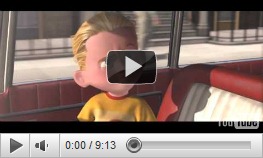
Focus on minute 4…

So admired was he that one of his fans, a young teenager, wanted to emulate him. Incrediboy was the name the kid chose, and gallantly offered his services to Mr. Incredible who bitterly rejected the offering. “I work alone”, said he.

Incrediboy was pissed off and seriously outraged, to the point that years later, when superheroes had been called off, he had amassed an enormous wealth and power to turn himself into the most fearful super-villain ever, Syndrome by name. Rejected by superheroes as a teenager, he had turned to the opposite side, and changed his personal aims to end up with any trace of past superheroes and end up dominating the world, as all decent super-villains usually do, of course.

I would say everybody knows how the story ended.

But now we have the modern version of Incrediboy trying to imitate superheroes again… True that todays Incrediboy looks more like the retired Mr. Incredible before he resumed his past glorious times, but still an Incrediboy with a big big big post traumatic stress syndrome…

He as well tries once and again to be like his hero… and his hero kingly ignores him once and again…

Being like this as Incrediboy, we resist ourselves to imagine how he’d be like as Syndrome.

Thursday, 18 November 2010

By George, they did it!


One of the greatest musical milestones in classical movies is My Fair Lady, based on George Bernard Shaw’s play Pygmalion.

Poor Eliza Doolittle, from lowest social extraction, is used by Professor Henry Higgins as an experiment about teaching English, in an attempt to prove his methods can bring such a low-class person to the ranks of Aristocracy. At least in what relates to speaking English properly.

Professor Higgins takes care of her completely, as she is poor and has no resources of her own besides selling flowers in the street for a living. She totally depends on his wealth while she receives her lessons.

Despite providing her all possible physical comfort, he is so much oriented to his own personal success with the language experiment he is using her for, he does not really care for being considerate at all with her, and actually treats her like a scientist would handle a guinea pig.

Naturally, she ends up completely fed up, and quits, disregarding and ignoring all the good he claims to have provided her with. She simply does not stand his arrogance and tyranny any more, and looks for alternatives that indeed could work for her.

By George!

We would say that “Professor Ballmer”, with all his wealth, power, aristocratic profile (well, this one under discussion), and methodologies, really can not stand up to all the Eliza Doolittles that so much have depended on him for so long, can he?


Swift cats


Indeed the “trial of the month” moves forward towards its closure. Peculiar trial, dressed with a lot of surrounding attrezzo, from the Pontifex Maximus at the Oracle’s (aka Big Mouth Larry) venomous invectives to all the assumptions made here and there of where all this will end.

There has certainly been a big unbalance between the relative importance of the heavy-weight witnesses presented by the two parts. From the Pontifex himself and co-President Katz from the Oracle to Bill McDermott and Werner Brandt for the Germans, the overall declarations have as well fallen short to expectations, and basically around their original positions: up to $4 billion according to the oracle, not more than $40 million offered by the Germans. And none of the parts have given in more than an inch from those positions.

One of the strongest witnesses from the oracle, however, has been co-President Katz, whose main argument was about rewarding bad behaviour of the Germans. Ironically enough, “Katz” is a German name derived form Katze, meaning cat…

“It’s like stealing a $2,000 watch, selling it for $20, and offering to pay the $20 back as compensation”, she’s declared.

The argument is indeed difficult to respond appropriately after a first thought. It might have made a strong impression in the jurors on behalf of the oracle. as a good finance expert, she has even mentioned figures in her example that are exactly proportional to the figures discussed in the trial. 2,000 is 100 times 20, ad $40 billion is exactly 100 times $40 million. Very, very, very smart from hers.

However, there is a subtle nuance that jurors and judge Phyllis Hamilton should take into account. If someone steals your $2,000 watch, indeed he is stripping you off $2,000. Downloading copyrighted material is basically making a copy of that material. And copying it is not stripping you off the value of that material. So the point is basically that illegally copying copyrighted material, SAP used it for its own benefit without really preventing the oracle from using it on their own. In other words, it’s like an athlete unfairly competing in a running race by using illegal drops that reduce the competitive advantage of a better honest runner.

And this id probably why the actual damages (only 358 customers switched from the oracle to TomorrowNow, according to information available online) have been so small compared to the theoretical potential.

Not denying that SAP behaved bad, the already settled amount of $120 for criminal charges, plus damage reparations of $40 really sounds reasonable in our ears., though this is just an opinion of ours, who do not claim at all any expertise in law matters.

What we really are impressed with is Katz’s rationale and argumentation… together with a much more senior and mature attitude than her boss’. Indeed swift, indeed smart, indeed subtle, and probably very powerful. No surprise she sits where she does at the oracle.

Hard and tough rival in the internal struggle for the Pontifex heritage you got there, Mark Hurd…


Wednesday, 17 November 2010

Next Year in Jerusalem


In the times of Roman Emperor Hadrian, second century after Christ, Simon Bar-Kochba led one of the very last Jewish revolts in Judaea against the imposition of Roman religion.

This revolt when pretty much like previous ones: Three years combat, about half a million people dead, including leader Simon Bar-Kochba and the rabbi Akiba, the latter after great torture.

Emperor Hadrian built a new city, Aelia Capitolina, on Jerusalem’s ruins and barred all Jews from coming anywhere near it.

Since then, all over the worlds, Jews have mournfully prayed “Next Year in Jerusalem…”

Palm’s Rubinstein, in recent appearance at Web 2.0 Summit has claimed Palm’s birthright to have owned the smartphone market, should they have done a better job.

In other words, should have they cared for doing a decent job, their “Jerusalem” would have flourished and set as the smartphone reference. But a much stronger power, call it Apple, Nokia or Blackberry, has de facto imposed new rules in the market, and destroyed Palm’s “Jerusalem” with a lot of pain and suffering for the latter.

Ever since, it appears that Palm’s staff keeps on claiming, quite mournfully too, “Next Year in WebOS…”

Dorothy’s smartphone


We have recently learnt Apple is adding The Beatles to iTunes… Good for them! No matter whether Google or Amazon were after the same deal, the UK band goes to Apple.

Easy to say that Apple’s taking The Long and Winding Road… but we prefer to think it is their competition who are going to have some difficulties on the road, and it is for them that the road might be really long and winding.

However long or winding it still looks as well, in our opinion, more like the yellow brick road. And if we think yellow brick roads, we couldn’t avoid thinking of Dorothy, could we?

So here we have Dorothy starting her way on the yellow brick road trying to figure out how to succeed with her smartphone.

First she gets a call from the Scarecrow, who asks her some help to add some brains to his berry-like smartphone… Willing to learn from his experience, Dorothy asks him to join her in her quest for success in the smartphone market.

A short while after, she gets a call from the Lion with no courage. “Hey, Dorothy, need some help here… Got the muscles and the fangs, but I am really afraid of getting out there… Maybe next year if I make it for WebOS 2.0?” So Dorothy invites him as well to join her and the berryphone Scarecrow in their quest for success in the smartphone market.

Later on they find the Tin-Man lacking of heart… “Oh, what a nice android”, they say. “Come join us to look for success in the smartphone market”. The Tin-Man replied: “Indeed I need help: So many versions I have, and so many handset makers I need to support, I do not really know where my heart is, if I have any”.

And so the little group went on looking for success in the smartphone market…

“We’re off to see the Wizard, the wonderful Wizard of Phones, because, because, because, because, becaaaaaaauuuuuuse… because of the magical things he does”…

And they indeed found the Wizard… in a black turtleneck and old jeans, wearing round glasses.

Up to the reader, by the way, to think who Dorothy is… (hint: sweats a lot!)

lovely classic, still, obviously, up to date!

A wintel déjà vu


We like taking a look back to History every now and then and compare the past with what might be going on every day. In many cases we see amazing analogies, but in some others there are nuances that make slight twists.

Following closely as we do the early stages of the booming smartphone market, we cannot prevent ourselves from having a certain déjà vu feeling as we compare it with the PC business some years ago.

We could say for a moment that smartphones today might represent what PCs did in the 1990s, when the market was certainly growing very fast under the impulse of its consumer side. PCs were not unknown to the consumer market, though real technology leaps and breakthroughs were coming from the enterprise segment, and were gradually implemented in the consumer segment as costs were being slashed and PC manufacturers were in the need of keeping their business targets up.

In that process, two big winners consolidated positions at the expense of hardware manufacturers: Intel and Microsoft, who dominated that market, and all the selling effort cost their lives to many hardware assemblers that could not keep the pace. From all the manufacturers, multinational or local, from the 1990s, very few survive to this date. Big names like Dell, HP, Toshiba, Acer, and Lenovo (as ex-IBM) are the toppers of this short list.

Smartphones have followed a very similar way, as they are starting to boom in the consumer market after an initial successful deployment in the enterprise segment. We believe Qualcomm will play the role of Intel, and, naturellement, Android will play Microsoft’s.

We seem not too be in full disagreement with the opinions from others.

However, we see some differences with the Wintel tyranny if we approach the case from a different angle.

First, we can look to the the actual use consumers and professional users give their smartphones: Connectivity. Smartphones are the logical evolution of standard mobile phones because of the connectivity possibilities: Email, internet, social networking… Before that, mobile phones were basically regular phones to do texting as the most advanced feature. Like PCs in the 1990s, which, in very many cases, worked standalone at home, or connected at most within a professional intranet.

Smartphones can work today autonomously and get connected directly to almost everywhere with no necessary need of uniformity in the way they connect (ie needing the same operating system).

Second, we think today technology is much more accessible to people in general, who have grown earlier much more knowledgeable. In the 1990s, when people were acquiring their first PC for home use, they needed something they were familiar to, the Windows familiar environment they had learnt at work. This gave a major advantage to the Wintel tyrants. Today, even kids know how to use a smartphone with no need to depend on any familiar system used before at work, obviously.

Third, in the 1990’s, there was a certain lack of competition, as Apple, the only possible one, was suffering its famous “near-to-death” experience. If you wanted a PC, there were almost no alternatives to Wintel. Today, the smartphone market has been led by Apple, Nokia and Blackberry, and Androids are catching up real fast. Even HP is promising something on Palm’s WebOS, and there is a certain attempt from Microsoft with Windows Mobile 7.

So, yes… there is a risk of having a “Qualdroid” tyranny in the Wintel space… and we indeed pity some of the handset makers that will die for it sooner or later. But, thank God, it seems that there will be intelligent life out of it, and there will be valid alternatives for the benefit of the market.


Monday, 15 November 2010

Quest for blood


The Pontifex Maximus at the oracle is not really willing to give up in his quest for blood from SAP. He wanted Apotheker’s, who fundamentally has been ignoring the case and has probably made a new record in air mileage in the last days.

Having failed there, still they got a heavy-weight official today, Bill McDermott, SAP co-CEO. It looks as if the Pontifex will not give up without a sip. A sip from SAP, naturellement.

Bill McDermott has formally apologized. Yes he has, and this is very positive for him and for SAP.

However, the oracle’s lawyers have repeatedly insisted in knowing if blood was spilt after the case within SAP.

For God’s sake, what else do these guys want? What is the point? Does that really increase or reduce the guilt SAP has admitted and (now) even apologized for? Does that impact the damages SAP has offered to (reasonably) pay for?

As we said in a previous recent post, frankly, they are beating the Germans up too much, as President WIlson and his European allies did in 1919 with the Treaty of Versailles that ended WWI.

The Pontifex’ thirst seems pretty much like a vampire’s… Twilight’s Vulturi?